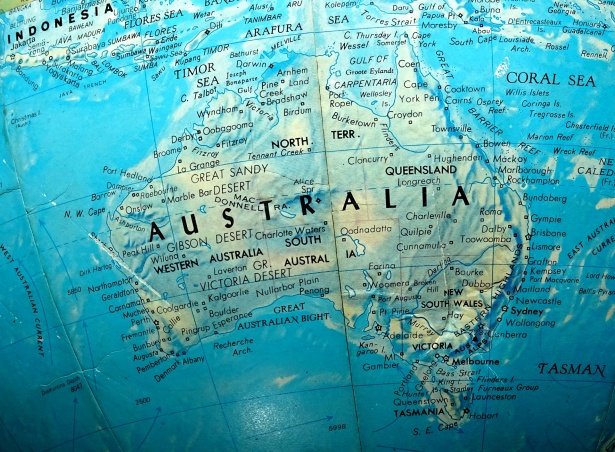
In my major, International Relations, one of the skills that I believe is most valuable is the ability to take common concepts such as power, resources and ideologies, and apply them across a range of states, disputes and eras. In looking through this lens, you may find that many states have more similarities than differences.
For example, one concept I found myself returning to often throughout my degree is the theory of realism.
First and foremost, the behaviour of the state is ultimately shaped by its environment; and while they may be in a range of locations and circumstances, all states must contend with the anarchic nature of the global political arena. This lack of a leader or governing authority over the international landscape, in line with the theory of realism, will cause states to often act in self-serving ways.
Excerpt from Is President Trump a realist? Key concepts in International Relations, 2020
“He [Trump] famously stated during the 2016 election that China holds malicious intent towards the US, calling the country a “currency manipulator”… Since being elected, he has acted on this view, imposing tariffs on Chinese imports…Based on these statements and policies, Trump clearly sees these countries as, not only economic competitors, but fundamentally self-serving to an extreme degree.”
A key component of realism is the upholding of state sovereignty as the single biggest priority and motivation for states. Sovereignty, and the protection of one’s borders, is seen at the upmost priority because it conveys legitimacy, and in some situations, the right for a state to exist. As such, for realism and those ascribing to this view, hard power such as military or economic power, is often seen as the most practical means of international relations.
Excerpt from What qualifies as a serious threat to Australia in the Asia-Pacific region? Australia and the Changing Asia-Pacific, 2022
“Australia has recognised China’s military prowess and subsequent potential threat, and taken late, reactive action; this is most obviously seen in their military alliance with other countries, many being rivals of China. For example, Australia has entered into a controversial security pact with France and the US called AUKUS – an agreement involving the construction of nuclear submarines for Australia’s naval defence, and the creation of a nuclear submarine base in Australia.”
I found that applying the theory of realism to multiple states, and in a range of different contexts, allowed me to better understand both the theory of realism, and the actions taken by states.
When I undertook my international experience, I had a valuable opportunity to learn about international relations in another country, from another country’s perspective. I studied two subjects in South Korea, both covering similar topics such as South Korea’s modern history, politics and culture; however, one subject was to be taught by an American, the other a South Korean teacher. This further allowed me to explore the impact of perspective in international relations.
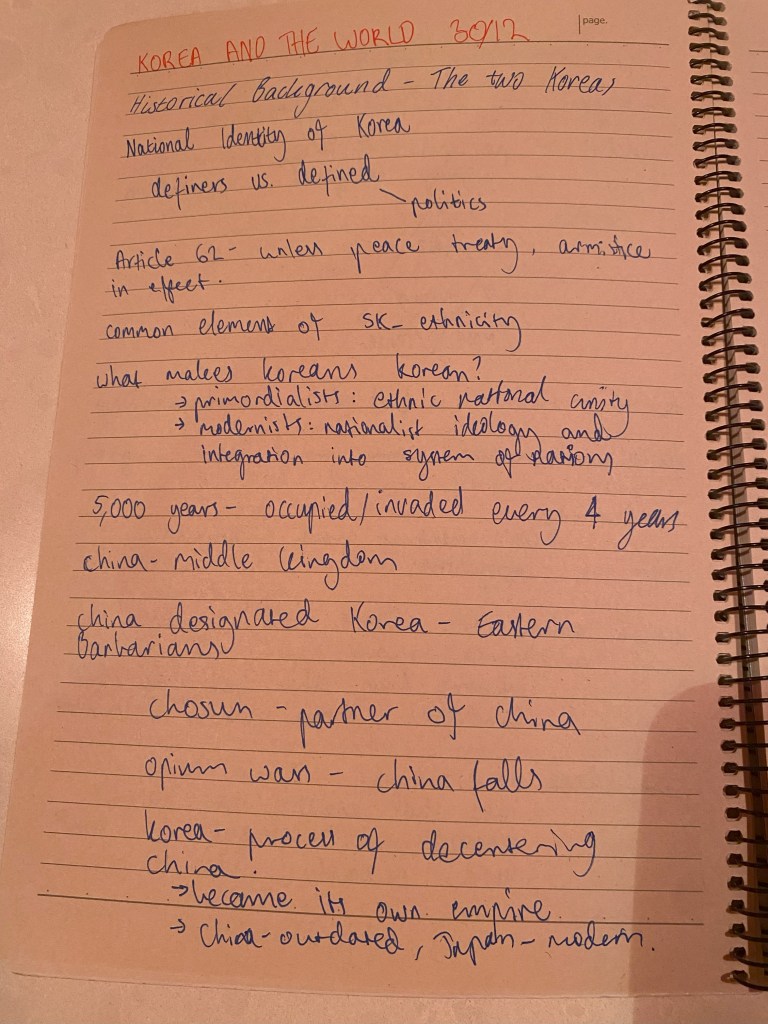
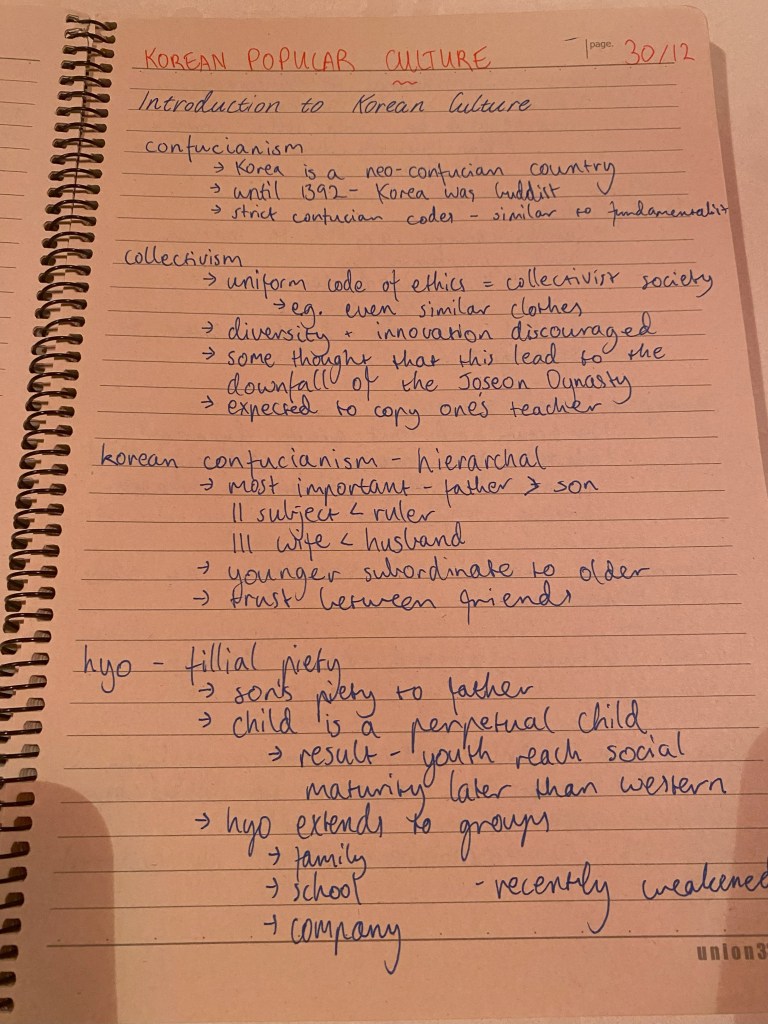
Studying these two subjects forced me take the concept of adapting to different perspectives from a state level to a personal level. In one of my first classes, my teacher began with a PowerPoint slide stating that “The personal is political”- this was a valuable reminder to me. In International Studies, I feel that it is easy to explore subjects too broadly, without taking into account the individual human experience.
Out of my two teachers, in South Korea, my American teacher favoured teaching through a set structure, including many references to Korean academics and literature- a style he favoured due to having moved to South Korea as a young adult, to study literature at a South Korean university. In comparison, my South Korean teacher favoured discussion and questions, peppered with personal anecdotes. He would often tell us stories from his childhood, experiencing some of the events that we were learning about in the classroom. For both, their life experience had shaped them, and the way they taught students.
Throughout my degree, I have found that the key to maintaining and increasing discipline-specific knowledge is to apply that knowledge: to different states, across different time periods, and always keeping in mind different people, and how their experience has shaped them.
 The Wonderful World of International Relations - A Portfolio & Archive
Leave a comment