Less than a month before I travelled to South Korea, the then- South Korean President declared martial law; an act that that had very little warning proceeding it, or reasoning behind it, even to South Korean citizens. Although the act lasted only six hours, the political ramifications lasted far longer, and permeated my visit.
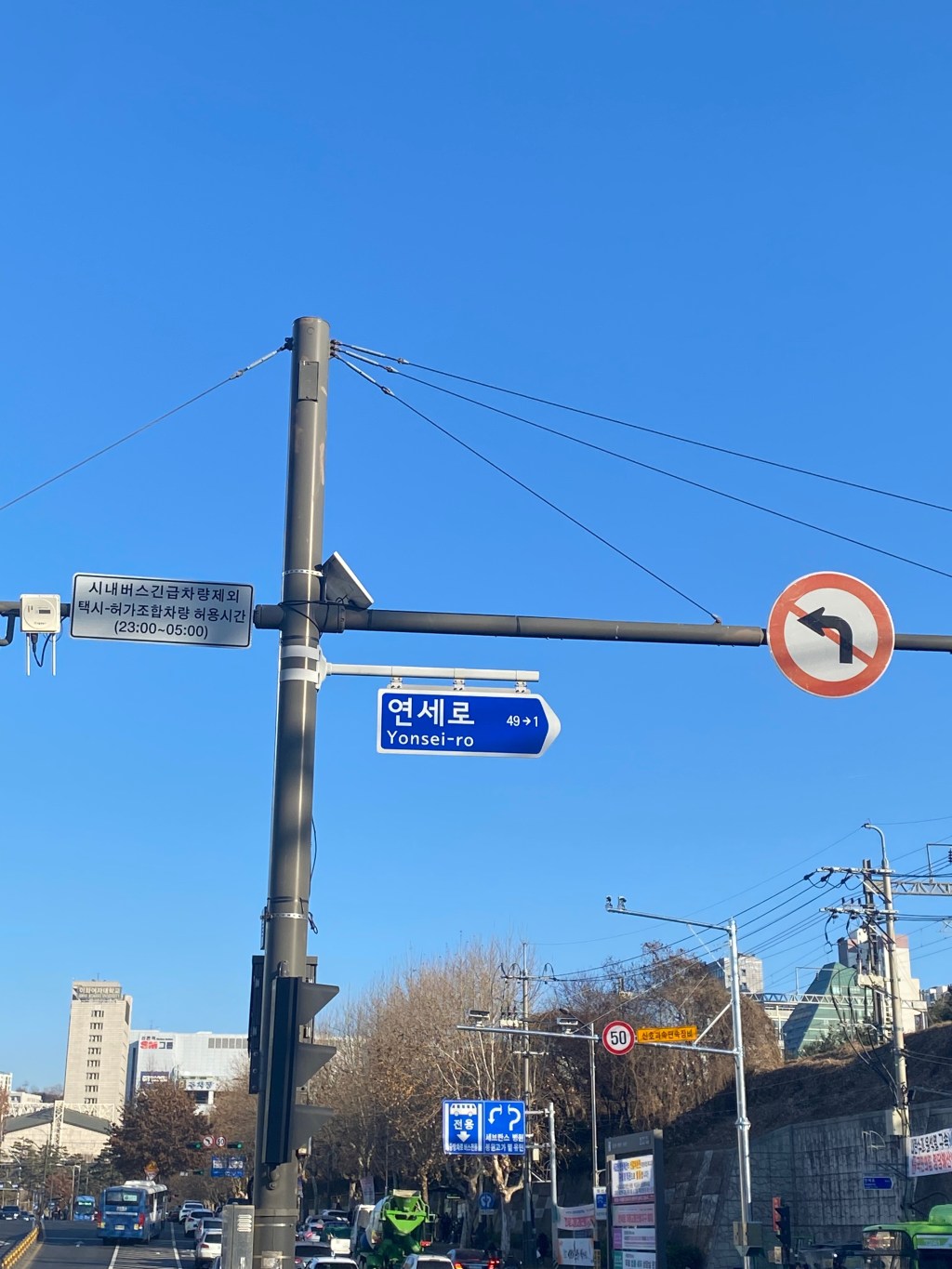
I had enrolled at Yonsei University, to study two subjects: Korean Popular Culture, and Korea and the World, with the aim that, at the end of my trip, I would combine these two subjects to grant me a well-rounded understanding of South Korean culture, history, and politics both domestic and international.


When I first arrived, I loved the city of Seoul so much I feared I wouldn’t pay any attention to my classes, and would only prioritise seeing as much of the city as I could before I left. However, in South Korea, I’d never been more motivated to study. One reason for this was that my teachers were just as invested in their students exploring the city as I was, regularly recommending anything from events, to palaces, to nearby restaurants and bars. Another reason for my motivation was that I could see my classroom all around me. I regularly, and unintentionally, saw various landmarks, foods, performances, and other aspects of South Korean life that, thanks to my studies, I had a whole history for. I had rarely travelled somewhere and felt I could fully appreciate my surroundings to this degree; as such, I was equally motivated to attend class and sightsee.


My studies at Yonsei were one of the first and best chances I’d gotten to apply my classroom knowledge in the real world. In class, I would learn about South Korea’s recent history of dictatorships and military coups post-Korean War, and then when I would travel throughout Seoul to shop, eat, or sightsee, I would inevitably come across anti-government sentiment: posters detailing times and places to meet to protest the President, and A4 signs taped to bus stops, in Korean and English, warning people to take the train rather than the bus as to not risk blocking protestors. And, of course, the protests themselves, which would’ve been difficult to avoid even if I’d have tried.
I also learnt to appreciate the intersection between culture and politics, through my two units. My Korean Popular Culture teacher, at the beginning of our first class, warned us to take this class equally as seriously as any other, and to not dismiss popular culture as meaningless or frivolous. Through this class I learnt the importance of culture both providing context to the environment in which politics operates, and being a medium through which politics may be expressed.
Song: Pretty Girl by KARA
I consider my South Korea trip one of the most valuable learning experiences I have ever had; I felt incredibly privileged to experience another country’s culture while having the opportunity to learn about its full history and cultural context. After this, I doubt I will ever be able to view travel as anything other than, first and foremost, a learning experience, in which every opportunity should be taken to understand every facet of your surroundings. This approach will not only enrich your travels, but also yourself and the way that you see the world.
 The Wonderful World of International Relations - A Portfolio & Archive
Leave a comment